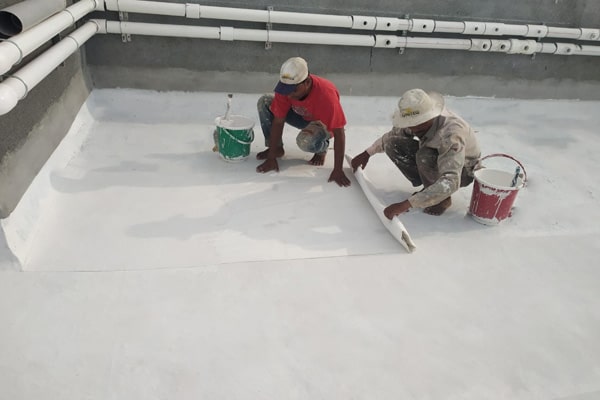
Waterproofing is a process or set of measures taken to make a structure or material resistant to the penetration of water, preventing it from getting damaged or degraded by moisture. This is essential for various applications, such as buildings, basements, roofs, foundations, tunnels, and even certain fabrics or electronic devices. Waterproofing aims to protect structures and materials from the detrimental effects of water, including corrosion, rot, mold growth, and structural damage.
Here are some common methods and materials used for waterproofing:
- Membrane Waterproofing:
- Sheet Membranes: These are pre-manufactured sheets made of materials like bitumen, PVC, or EPDM, which are applied to surfaces to create a barrier against water.
- Liquid Membranes: Applied as a liquid that forms a continuous, seamless membrane upon curing. Examples include bituminous coatings, elastomeric coatings, and polyurethane membranes.
- Cementitious Waterproofing:
- Cement-based Coatings: These coatings are applied as a slurry or paste directly to the concrete surface. They react with the concrete to form a waterproof layer.
- Crystalline Waterproofing: Crystalline materials can be added to concrete or applied as a coating. When water comes into contact with the material, it triggers a crystalline growth that seals pores and capillaries, making the structure waterproof.
- Liquid Sealers:
- Penetrating Sealers: These are applied to the surface and penetrate into the pores of the material, forming a water-repellent barrier without changing the appearance of the surface.
- Surface Sealers: These create a protective layer on the surface to prevent water penetration. They can be clear or pigmented and are often used on decorative surfaces.
- Drainage Systems:
- Installing drainage systems, such as French drains or sump pumps, helps to manage and divert water away from vulnerable areas.
- https://nationalbuildingsolutions.in/
Effective waterproofing depends on factors like the type of structure, the materials involved, and the specific requirements of the environment. Regular maintenance and inspection are also crucial to ensure the ongoing effectiveness of waterproofing measures.